
You're backing out of the driveway, glance in the mirror, and catch your five-year-old crouched under the garage door as it comes down, chasing a ball that rolled past the sensor line. Or maybe it's the dog, bolting for a squirrel just as the door starts closing. Nothing happens this time. But your stomach drops anyway, because you realize you don't actually know if that door would have stopped.
That split-second doubt is the whole problem. Garage doors are the largest moving object in most homes, and in households with kids or pets, they get tested in ways the manufacturer never quite pictured — little hands on the wall button, dogs darting through the opening, toddlers treating the bottom panel like a step stool.
What Actually Goes Wrong
Most garage door injuries don't come from one dramatic failure. They come from small gaps in a safety system that was designed with several layers of backup, where one or two layers have quietly stopped working.
- Auto-reverse doesn't trigger. Every opener made since the mid-1990s is required to have a mechanical force sensor and, since 1993, photo-eye sensors near the floor. If either is misaligned, dirty, or disconnected, a closing door may not stop or reverse when it meets resistance — including a small body.
- Pinch points on older panels. Many original doors on older homes in this area, especially steel doors installed before pinch-resistant designs became standard, have horizontal seams that close like a hinge. Little fingers find these exactly where the panels meet.
- Exposed springs under tension. Torsion springs store enough energy to cause serious injury if they fail or are handled incorrectly. Kids and pets don't know to stay clear of them, and homeowners attempting a DIY spring fix often don't either.
- Remotes and keypads within reach. A wall-mounted button at toddler height, or a garage remote clipped to a visor a curious kid can reach, turns the door into a toy with real crushing force.
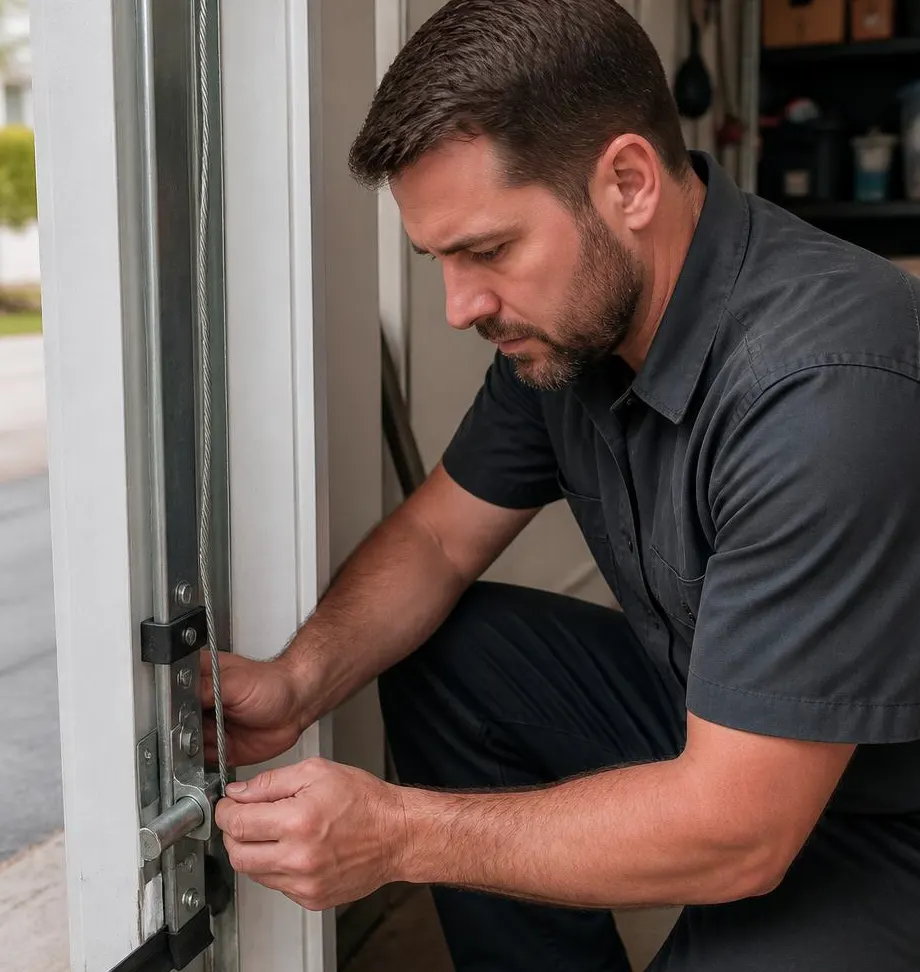
- Bottom brackets and cables. These hold enormous spring tension and can snap with force if the door is forced open manually or if cables fray. Pets sniffing around the bottom corners are at direct risk.
How Bad It Gets
A garage door that fails to reverse doesn't tap — it continues closing with hundreds of pounds of force. Pinch points can cause deep lacerations or amputated fingertips in an instant, no warning sound involved. A torsion spring under tension, if it fails suddenly, can whip cable or hardware across the garage with enough force to break bones. None of these are rare industrial accidents; they're the predictable result of a safety feature that stopped doing its job months before anyone noticed.
The freeze-thaw cycles common to Chester County winters make this worse on older doors. Ice buildup on tracks, stiff or cracked weatherstripping, and cold-thickened lubricant all change how a door moves and how reliably its safety systems respond. A door that reversed reliably in July can behave differently in January.
The Checks That Actually Prevent This
None of these take more than a few minutes, and most require no tools.
- Test the auto-reverse monthly. Place a roll of paper towels or a 2x4 flat on the ground in the door's path and close it. The door should reverse immediately on contact. If it doesn't, stop using the opener until it's repaired.
- Check the photo-eye sensors. They sit a few inches off the floor on either side of the track. Wipe the lenses, confirm the indicator lights are steady (not blinking), and make sure nothing — a bike, a storage bin, a dog bed — blocks the beam.
- Inspect panels for pinch gaps. Run a finger carefully along the seams while the door is still. If you can feel a gap your child's fingers could fit into as the panels fold, pinch-resistant panel inserts or a newer door design should be on your list.
- Move controls out of reach. Wall buttons should be at least five feet up, ideally with a cover guard. Keep remotes off visors kids can access and consider a keypad with a code instead of a clip-on remote for young drivers or sitters.
- Keep the spring area off-limits. Don't let pets sleep near the spring assembly and don't attempt a spring replacement yourself — this is one repair where the cost of a professional is the safety feature.
- Lubricate before winter, not after a jam. A silicone-based lubricant on rollers, hinges, and the torsion spring helps the door move predictably through cold snaps and salt-heavy slush, instead of binding and forcing the motor to push harder than it should.
When to Call Chester Springs Garage Door
If your auto-reverse test fails, if a panel has a visible pinch gap, or if you hear grinding, popping, or see a stretched or frayed cable near the bottom bracket, stop operating the door and call us. We handle garage door opener repair and installation to restore proper sensor and force-sensor function, and we handle spring replacement with the right tools and tension equipment so no one in the house is near a spring under load. If you're not sure what's wrong, our emergency garage door service means you're not stuck guessing with a door that won't close — or won't stop.
If you've got kids, pets, or an older original door in Chester Springs, Exton, Downingtown, Phoenixville, Malvern, West Chester, Kimberton, or Lionville, give Chester Springs Garage Door a call. We'll check the safety systems properly and fix what's actually putting your family at risk.